

Rose Island Lighthouse, in Newport, Rhode Island
Charles S. Curtis of Rose Island Lighthouse, in Newport, Rhode Island, is the Longest Serving Keeper
After the Civil War ended in 1865, Rhode Island saw increased shipping traffic and tourism linking Newport, Boston, and New York. Rose Island Lighthouse, located about a mile from the Newport shore, began construction in 1869 and was completed in 1870.

Keeper Charles S. Curtis. Courtesy U.S. Lighthouse Society
Charles S. Curtis was a Civil War veteran who started out as a First Assistant Lighthouse Keeper at Sakonnet Lighthouse in Rhode Island from 1886 to 1887. He became the keeper at Rose Island Light in 1887. His 31-year tenure (1887-1918) remains the longest in the lighthouse’s history. Keeper Curtis cherished the island and lighthouse, taking his responsibilities seriously throughout his long stay. Each evening at sunset, he heard the cannon shot from nearby Fort Adams, signaling sundown. He would then lower the flag and climb the stairs to light the beacon for the night. He mounted a mirror on a pole outside his living room window to make it easier to monitor the flashing light’s operation in the evening.
To save money on their meager wages, Curtis grew crops and raised farm animals with his associate, Jesse Orton. Sometimes the animals strayed from the lighthouse grounds into the military compound, annoying the local officers. He housed his cow in a long building behind the lighthouse, which also served as a storage area for explosives.
On April 21, 1894, Keeper Curtis’s son discovered grave robbers exhuming two bodies from graves on the island. He sought assistance and began to pursue the robbers, but they escaped in a boat and disappeared into the fog.
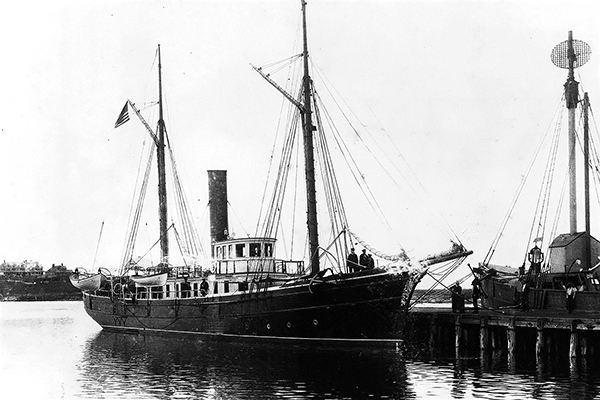
Revenue Cutter Dexter in Massachusetts Courtesy US Coast Guard
During the first two weeks of February 1899, the region endured some of the coldest winter weather on record. Temperatures fell below zero for more than a week, and a blizzard struck Newport on February 10, lasting several days. Portions of Newport Harbor froze during the storm, trapping Keeper Curtis and his family on Rose Island. He could not obtain food or coal to heat the lighthouse, and some family members fell ill and needed assistance. On February 14, 1899, Curtis climbed the lighthouse’s flagpole and turned the American flag upside down as a distress signal. Officers aboard the Revenue Cutter Dexter saw the signal and rushed to his aid. The cutter had to break through sheets of ice to reach Rose Island Lighthouse. Upon arrival, they found several of Curtis’s family members at the lighthouse, sick and with very little food or fuel. The Dexter transported the family members to the nearby Goat Island torpedo station and returned with food and coal for the lighthouse.
While the fog bell was still in use, Keeper Curtis and his wife, Christina, had to go ashore one day, leaving their daughter, Mabel, alone on the island. Thick fog suddenly rolled in, and the young girl couldn’t start the fog bell mechanism, so she grabbed a hammer and rang it manually, approximating its official time sequence for several hours until her parents returned. Mabel often rowed herself over a mile to Newport for school. If the seas were rough or it was too foggy to return the same day, she sometimes stayed overnight with friends. Mabel had an entrepreneurial spirit and would go “crabbing” around the island, selling the crabs to locals to earn a little money. Her father would also pay her fifty cents to clean the lighthouse brass, and she earned eight dollars for digging the family’s garden.
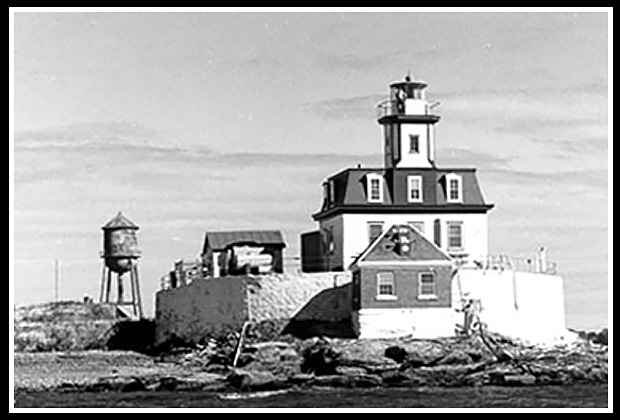
Vintage Rose Island Lighthouse
Courtesy US Coast Guard.
Wanton Chase was born on May 15, 1909, and as a baby was sent to live on Rose Island with his grandparents, Charles and Christina Curtis. Wanton was a sickly baby, and his mother, Mabel, thought the fresh salt air might do him good. Wanton would later write that using the station’s outhouse during the winter was a frigid experience, as the wind would blow up through the opening in the cavity on which the toilet sat. One time, a visitor to the station fell ill and lost his false teeth in the outhouse. Keeper Curtis grabbed a ladder, climbed down into the outhouse, and retrieved the teeth, which were just like new after a good washing.
Keeper Charles Curtis earned two life-saving medals during his tenure. One was awarded in 1914, when he was recognized for rescuing men from a disabled powerboat rapidly being carried out to sea by the tides.
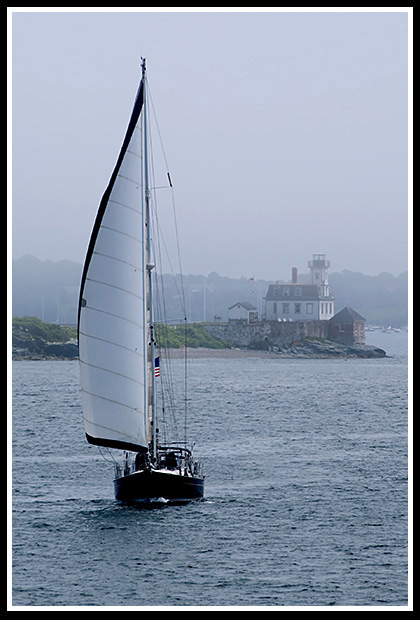
Sailboat passes by Rose Island Lighthouse in the fog, in Newport, Rhode Island.
Congress passed a bill in 1918 mandating that all officers and employees of the Lighthouse Service reaching age seventy must retire. As Keeper Charles Curtis approached his 79th birthday, he was compelled to retire at the end of 1918. However, he received the maximum possible retirement benefit, three-fourths of his average pay for the last five years of his service. The keeper passed away a few years later, in 1922.
He remained dedicated to the lighthouse for 31 years; however, it is said that he still visits and maintains it, even today. Many reports suggest that his ghost still walks around the lighthouse, checking to see if all is well. In one of his daily routines, after his shift ended at midnight, Keeper Curtis would descend the tower’s stairs from the lantern room each night and go into the kitchen for a glass of milk. After his death, visitors and staff members would hear footsteps coming down the stairs, then stop near the kitchen. As the island was a military base and once a quarantine station for cholera victims in the 1820s and those stricken with yellow fever in the 1850s, various reports of sightings and noises have been made over the years, as many believe Rose Island and the lighthouse may be haunted.
Books to Explore
America’s Boston Light:
Connected to History, Heroes, and Mystery
Celebrating 310 years, explore Boston Light’s history and its ties to historical events, shipwrecks, and rescues by its keepers and local lifesavers. Learn about its connections to famous heroes, notable figures like Ben Franklin, and intriguing mysteries.
Rich in colorful paintings, photos, and vintage images, these visuals bring the stories to life. Embark on this captivating journey through maritime history!
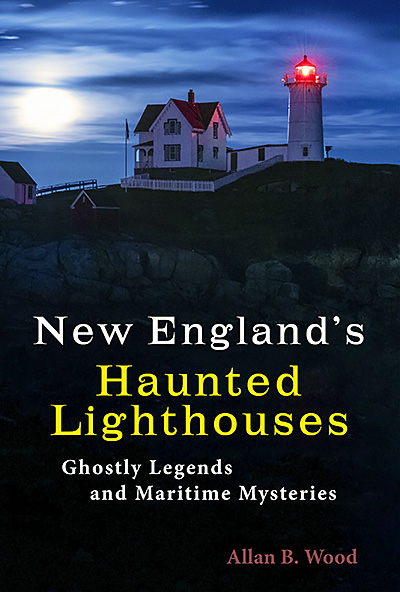
New England’s Haunted Lighthouses:
Ghostly Legends and Maritime Mysteries
Uncover the mysteries of New England’s haunted lighthouses! Uncover ghostly tales of lingering keepers like Charles Curtis mentioned above, victims of misfortune or local shipwrecks, lost souls, ghost ships, and more. Many of these accounts begin with actual historical events that later give rise to unexplained incidents. Immerse yourself in the tales associated with these iconic beacons!
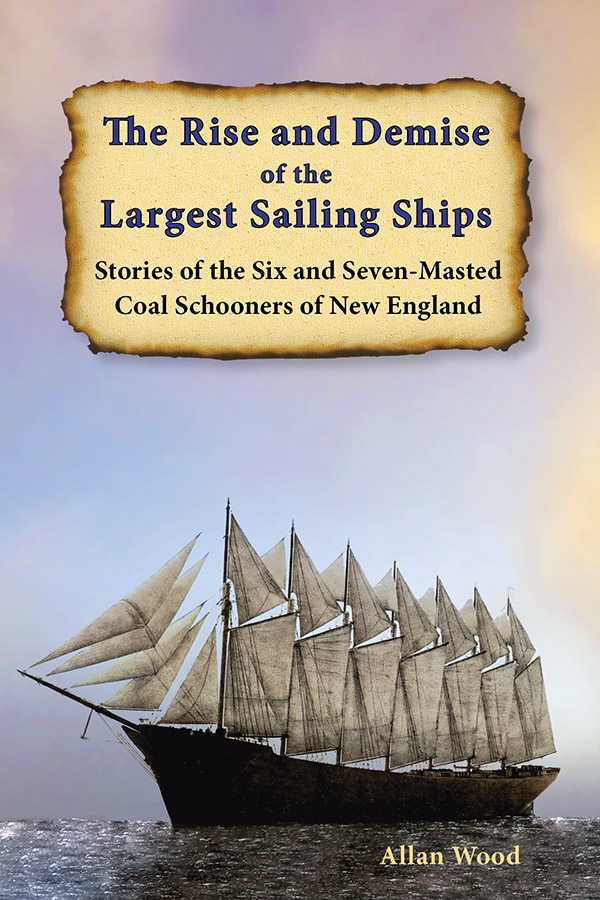
The Rise and Demise of the Largest Sailing Ships:
Stories of the Six and Seven-Masted Coal Schooners of New England
In the early 1900s, New England shipbuilders constructed the world’s largest sailing ships amid social and political reforms. These giants were the ten original six-masted coal schooners and one colossal seven-masted vessel, built to carry massive quantities of coal and building supplies, and measured longer than a football field! This self-published book, rich in color and vintage images, showcases the historical accounts that accompanied these mighty ships.
Also available from bookstores in paperback, hardcover, and eBook formats for all devices.

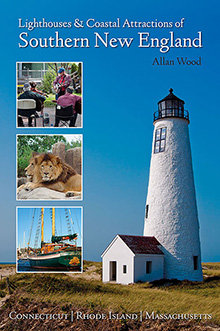
Lighthouses and Coastal Attractions of Southern New England:
Connecticut, Rhode Island, and Massachusetts.
This 300-page book provides memorable human interest stories from each of the 92 lighthouses. You can explore plenty of indoor and outdoor coastal attractions, including whale-watching excursions, lighthouse tours, windjammer sailing tours, parks, museums, and even lighthouses where you can stay overnight. You’ll also find plenty of stories of hauntings around lighthouses.

Lighthouses and Coastal Attractions of Northern New England:
New Hampshire, Maine, and Vermont.
This 300-page book provides memorable human interest stories from each of the 76 lighthouses. It also describes and provides contact information for numerous indoor and outdoor coastal attractions and tours. These include whale watching, lighthouse tours, unique parks, museums, and lighthouses where you can stay overnight. There are also stories of haunted lighthouses in these regions.
Copyright © Allan Wood Photography; do not reproduce without permission. All rights reserved.

American Lighthouse Foundation
Join, Learn, and Support The American Lighthouse Foundation