
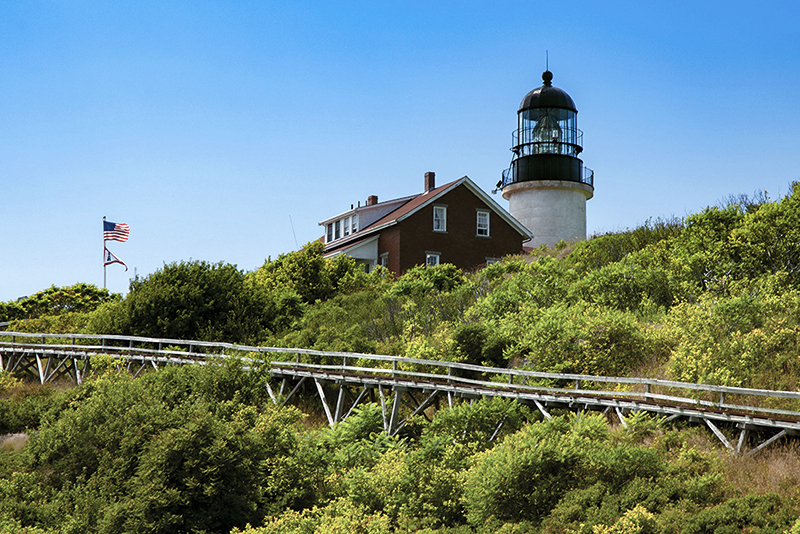
A wooden tramway leads uphill to Seguin Island Light.
Family Escaped Tragedy on a Runaway Tramway Car at Seguin Island Lighthouse in Maine
Seguin Island Lighthouse is Maine’s second-oldest lighthouse, built in 1796 and commissioned by George Washington. It is the highest lighthouse in the state, standing at 186 feet above sea level atop a very steep hill that overlooks the mouth of the Kennebec River, about 2.5 miles out to sea. Because anyone reaching the lighthouse had to hike the steep quarter-mile climb to the lighthouse, a tramway system was installed in 1895.
Before the first tramway was installed in the early 1890s, oxen hauled oil and supplies to the island’s summit. The first tramway was just over 1,000 feet long, a trestle-built railway powered by a mechanical engine. The Lighthouse Board’s 1895 report noted: “A railroad was built connecting the boathouse at the landing with the signal house. A car was provided, and a hoisting engine was set up to haul coal and supplies.” The tramway also carried keepers and their families as passengers up the steep hill from the small beach and back again.
When Elson Small was keeper between 1926 and 1930, the tramway was condemned as unsafe because it was rusting out and its wooden trestle was rotting. A new one was built a few years later, powered by a diesel engine and controlled by four levers that adjusted the speed and direction of the wire cable attached to the tramway car. The flat car measured four feet wide by six feet long and carried supplies and passengers 145 feet above the shore to the lighthouse, 750 feet from the shoreline.
Years later, a young woman named Joyce married assistant keeper (Coast Guard) Daniel Irvine, who maintained the lighthouse. Irvine was initially stationed at the South Portland Coast Guard depot, then transferred to the Kennebec River Station. On July 7, 1949, he was assigned to the remote Seguin Island Light.
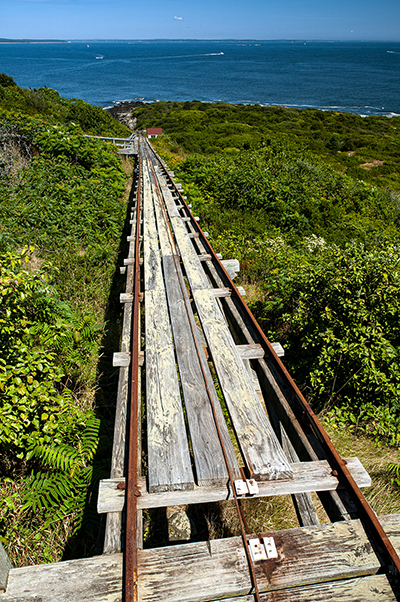
Tramway brings supplies from shore to Seguin Island Light.
The young family returned from a short vacation after Daniel was granted shore leave. On September 23, 1949, they boarded the tramway car with their two children—eighteen-month-old Millie and two-month-old Daniel Jr.—and headed up the steep incline toward the lighthouse. They also had a white-faced little dog that joined them in the car. It belonged to one of the assistant keepers on the island, Henry Cressey, and his wife. As they neared the top, the hoisting mechanism malfunctioned, and the bucket car began to roll back. Daniel quickly grabbed the baby and jumped out of the car, yelling for his wife to toss Millie and jump out too. Before she could, the cable broke loose, and the car began racing down the steep 750-foot track. With quick thinking and timing, Joyce managed to safely throw Millie onto a patch of grass about three feet below the runaway car. The toddler landed on the soft grass unharmed.
The car was traveling too fast for Joyce to jump out. About 250 feet from the tramway base, the car’s wheels left the track, and it pivoted sideways but remained on the trestle, which helped slow it as its wheels dragged over the railroad ties. Still going too fast for Joyce to jump out, the fast-approaching car eventually hit a bumper at the end of the runway, near the bottom of the hill. The sudden stop ejected Joyce from the “careening car,” where she sustained injuries, including a broken left thighbone (femur) and severe cuts and bruises, but she survived.
A nearby Coast Guardsman witnessed the accident from his work boat, which was just offshore from the island, and rushed to her rescue. She was found leaning against the railway, in much pain, next to the car that had ejected her. He brought her into his boat and then to the Kennebec Station. There, they took her to shore in a dinghy and transported her to Bath Memorial Hospital. She was in considerable pain from the incident but not in any serious or life-threatening condition. Henry Leonard, who managed the nearby Kennebec River Lifeboat Station, was surprised by her survival, saying he didn’t “know how she got out of it alive.” He credited her survival to the car slowing after it jumped the tracks, which lessened the impact on the landing platform. Unfortunately, the small dog inside the car was not so fortunate; it was found dead, its head crushed after the chaotic ride. Joyce Irving survived the ordeal, and had it not been for her and her husband’s quick thinking, it might have been a very deadly family tragedy.
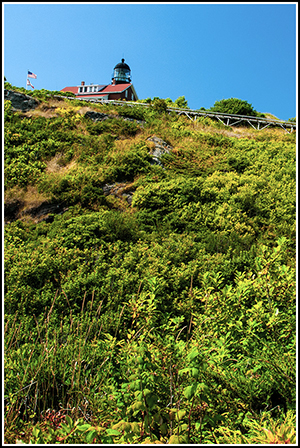
Seguin Island Light is situated high atop a hill.
The new tramway, built after the accident, is a 1,000-foot wooden structure on a railroad trestle and remains Maine’s only operating tramway. After the incident, passenger rides were permanently discontinued, and it now mainly transports supplies to and from the lighthouse during spring and fall.
The tramway shows signs of age and needs about $600,000 in repairs. Funding requests and donations are underway to restore it. Those interested in supporting the Friends of Seguin Island Light Station can contribute.
Access to the lighthouse requires a private boat or charter to the island and a hike up a steep, quarter-mile trail. The island offers a variety of hiking trails, as well as tours of the lighthouse tower and museum.
Here are some of my photos of Seguin Island Light.
Seguin Island Lighthouse is also believed to be haunted by the “old Captain,” mariners hearing piano playing over the water, and a little girl.
Books to Explore
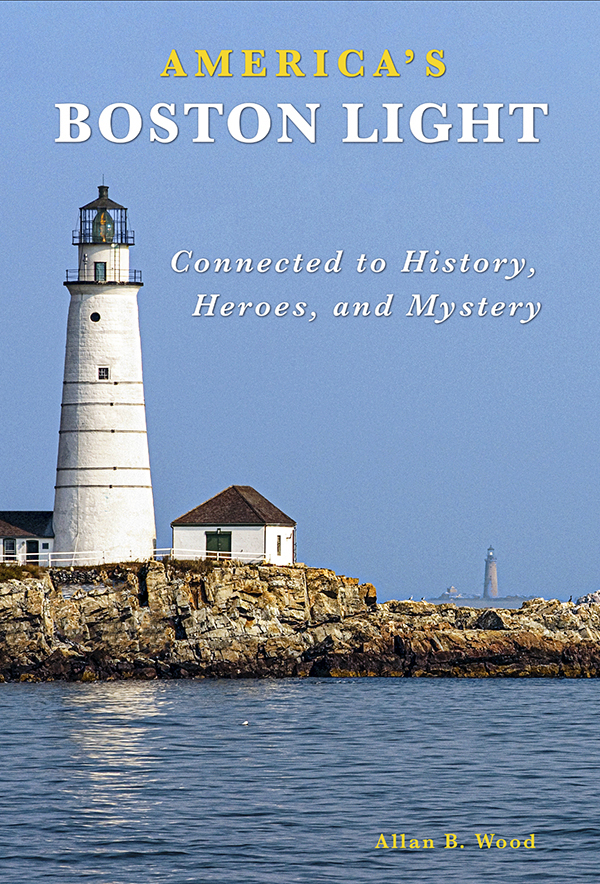
America’s Boston Light:
Connected to History, Heroes, and Mystery
Celebrating 310 years, explore Boston Light’s history and its ties to historical events, shipwrecks, and rescues by its keepers and local lifesavers. Learn about its connections to famous heroes, notable figures like Ben Franklin, and intriguing mysteries.
Rich in colorful paintings, photos, and vintage images, these visuals bring the stories to life. Embark on this captivating journey through maritime history!
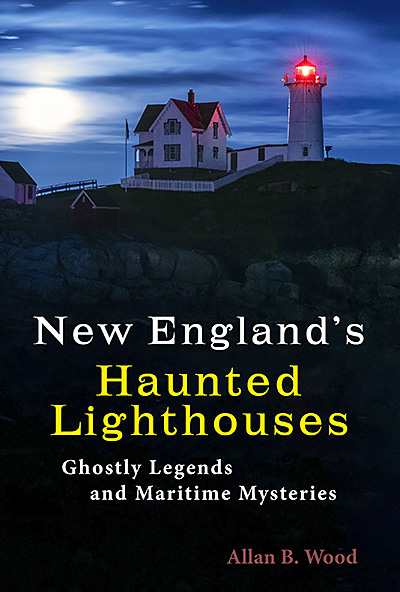
New England’s Haunted Lighthouses:
Ghostly Legends and Maritime Mysteries
Uncover the mysteries of New England’s haunted lighthouses! Uncover ghostly tales of lingering keepers, victims of misfortune or local shipwrecks, lost souls, ghost ships, and more. Many of these accounts begin with actual historical events that later give rise to unexplained incidents. Immerse yourself in the tales associated with these iconic beacons!
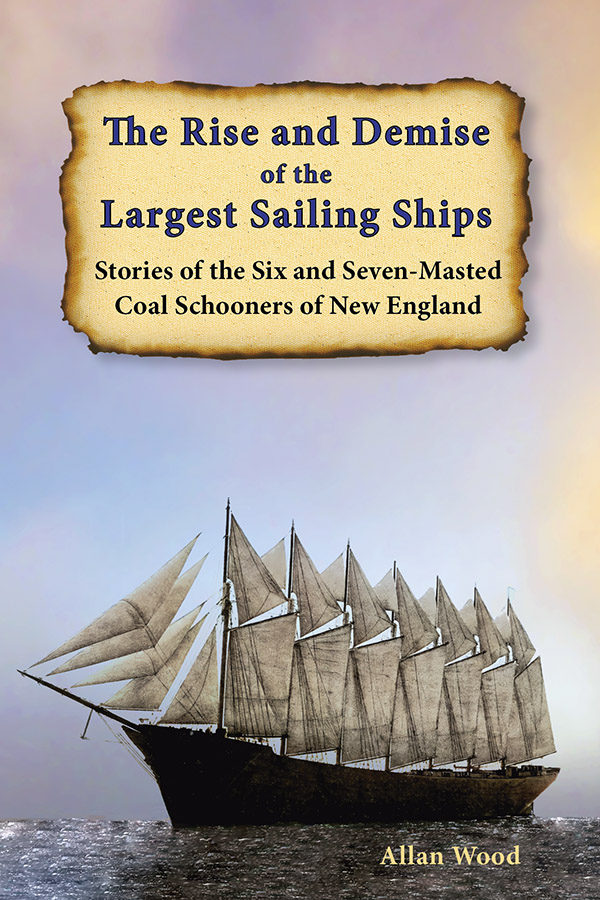
The Rise and Demise of the Largest Sailing Ships:
Stories of the Six and Seven-Masted Coal Schooners of New England
In the early 1900s, New England shipbuilders constructed the world’s largest sailing ships amid social and political reforms. These giants were the ten original six-masted coal schooners and one colossal seven-masted vessel, built to carry massive quantities of coal and building supplies, and measured longer than a football field! This self-published book, rich in color and vintage images, showcases the historical accounts that accompanied these mighty ships.
Also available from bookstores in paperback, hardcover, and eBook formats for all devices.


Lighthouses and Coastal Attractions of Southern New England:
Connecticut, Rhode Island, and Massachusetts.
This 300-page book provides memorable human interest stories from each of the 92 lighthouses. You can explore plenty of indoor and outdoor coastal attractions, including whale-watching excursions, lighthouse tours, windjammer sailing tours, parks, museums, and even lighthouses where you can stay overnight. You’ll also find plenty of stories of hauntings around lighthouses.

Lighthouses and Coastal Attractions of Northern New England:
New Hampshire, Maine, and Vermont.
This 300-page book provides memorable human interest stories from each of the 76 lighthouses. It also describes and provides contact information for numerous indoor and outdoor coastal attractions and tours. These include whale watching, lighthouse tours, unique parks, museums, and lighthouses where you can stay overnight. There are also stories of haunted lighthouses in these regions.
Copyright © Allan Wood Photography; do not reproduce without permission. All rights reserved.

American Lighthouse Foundation
Join, Learn, and Support The American Lighthouse Foundation