
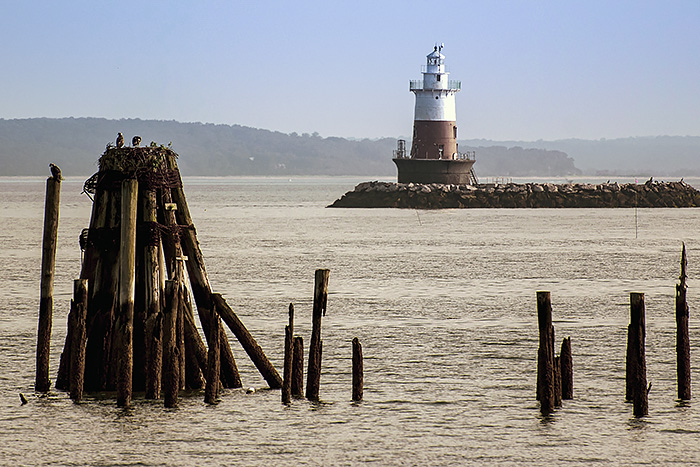
Birds nesting on old pier by Greens Ledge Light Tower in Connecticut.
Greedy Keeper Leads to the Death of His Assistant at Greens Ledge Lighthouse in Connecticut
Greens Ledge Lighthouse was built in 1902 and sits on an isolated reef a few miles offshore from Norwalk Harbor in Connecticut. Keeper John R. Kiarskon, a native of Sweden, arrived as assistant keeper in 1909 and was later promoted to principal keeper in early 1910. He was the second keeper at the lighthouse. Leroy C. Loughborough, in his mid-twenties, was the assistant keeper at the lighthouse. He was a healthy, strong individual who enjoyed his duties maintaining the beacon.
During the winter weeks of February, numerous storms, fog, and freezing weather across the region prevented the keeper from going ashore to gather supplies. On March 2, 1910, Keeper Kiarskon left his assistant to manage the lighthouse while he rowed to shore in the lighthouse station’s only skiff. He aimed to collect much-needed supplies, as food rations were scarce. He was also expected to pick up his and Loughborough’s paychecks. The keeper never returned to the lighthouse station, leaving his assistant without relief.
The keeper had left Loughborough alone at the lighthouse for eleven foggy and stormy days. The assistant keeper had only his little dog, Sadie, as his companion during this ordeal. As the days passed, the remaining food was divided into half rations until it was nearly exhausted. After that, they resorted to eating dog biscuits and Loughborough boiled salt water to survive.
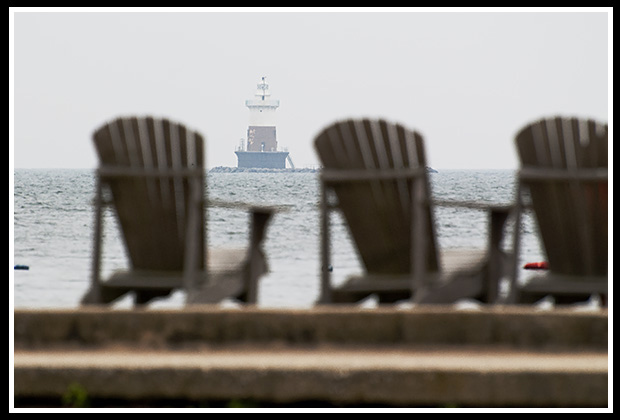
Greens Ledge Light in foggy distance with adirondack chairs in the foreground.
During the persistent fog and stormy weather affecting the area, Assistant Keeper Loughborough struggled to keep the light burning and the foghorn operational. He managed little sleep as the gasoline engine powering the foghorn consistently malfunctioned, forcing him to operate it manually. He raised an inverted flag several times during the day as a distress signal, hoping someone would rescue him, but the thick fog rendered his efforts futile. For the last three days, he hardly ate or slept. He feverishly worked on the engine to ensure the foghorn functioned day and night while trying to keep the beacon flashing as the fog continued to engulf the region. Soot accumulated on the glass surrounding the light, dimming its appearance. On the eleventh day, after Keeper Kiarskon had left him alone, he ultimately collapsed from exhaustion and near starvation. The light extinguished, and silence enveloped the fog.
Local mariners could neither see any light nor hear the foghorn and sensed something was wrong at the lighthouse. The owner of a small sloop named the Tecumseh observed that something was amiss with the lighthouse and reported the situation to the authorities. The lighthouse tender Pansy from the New York shore was dispatched to investigate, accompanied by Assistant Superintendent John S. Haywood. Upon arrival, Haywood called out and waited for a response but received none. He made his way into the engine room of the lighthouse, where he found Sadie lying next to Loughborough, who was nearly unconscious by the engines, while the canine could barely lift her head to acknowledge the new visitor.
Haywood and his men revived the exhausted Loughborough, who immediately apologized for neglecting his duties. He informed the assistant superintendent that he had been left alone for many days. Haywood found the logbook and noted that Kiarskon had made no entries for 11 days, corroborating Loughborough’s account. Carefully, the assistant keeper and his dog were brought to shore for medical attention. Loughborough received high praise for his heroism in the face of abandonment and the risk of starvation.
Kiarskon, who struggled with alcohol, became greedy after leaving Assistant Keeper Leroy C. Loughborough at the lighthouse. He signed his own paycheck and forged Loughborough’s signature on it. He managed to cash both paychecks at a local hotel and went on a drinking binge in nearby Bridgeport. The keeper was later found and eventually surrendered to the Bridgeport police. He was placed in a nearby jail to sober up and was charged with forgery.
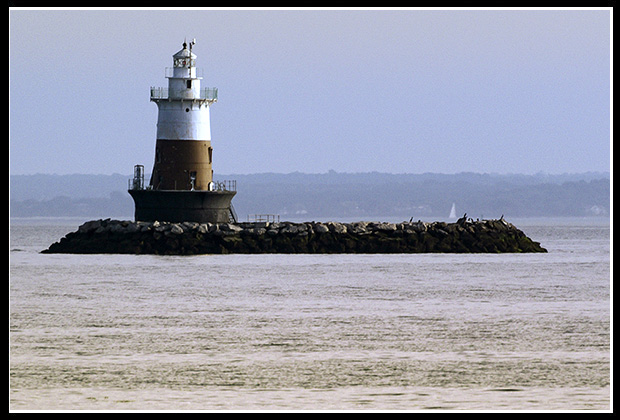
Greens Ledge Lighthouse on Breakwater
Aftermath
Keeper Kiarskon was immediately removed from his post and was expected to serve time in prison for forgery. However, any documentation regarding whether he served time in prison remains a mystery. Loughborough’s brother, George, was quickly brought in to take over the lighthouse duties as assistant keeper until a new keeper could be appointed to the station. Simultaneously, Leroy Loughborough tried to regain his strength. During the first few weeks, he seemed to be improving, although he reported feeling as if he had aged ten years and had developed some grey hairs from the awful experience. Soon afterward, it became clear that he faced a long recovery, and he fell ill with consumption, which the doctors attributed directly to the lighthouse ordeal.
Loughborough never recovered from the ordeal and was moved from a hospital in Narragansett, Rhode Island to his father’s home in Point Judith, Rhode Island. Nearly a year after his abandonment at Green’s Ledge Light, in February 1911, he died of tuberculosis. He was just 27 years old.
A Bit of Irony
William T. Locke became the third keeper after Kiarskon was removed from duty. Leroy Loughborough’s brother, George, who had been tentatively assigned to the lighthouse while awaiting the next keeper’s appointment, became his assistant. One day in March 1912, nearly a year after his brother Leroy’s death, George Loughborough went ashore to South Norwalk for a family matter. He left Keeper Locke stranded alone at the lighthouse for sixteen days without any communication, leaving the keeper weak and exhausted. Eventually, Keeper Locke managed to inform the authorities on the mainland of his predicament. He explained that he had had little sleep since his assistant’s departure, as he needed to maintain the light and keep the foghorn operational day and night without help. The keeper had also reduced his daily rations to a minimum out of fear of starvation.
Keeper Locke eventually recovered from the ordeal. It is unclear what happened to George Loughborough, but his career as a lighthouse keeper was undoubtedly over. George’s only response to reporters regarding any reason for his untimely departure, which left the keeper stranded, was that he learned of an aunt’s illness and went to visit her in Wakefield, Rhode Island. This story invites further exploration, but few details are available. Perhaps, with the death of his younger brother, it may have affected George’s mental health.
Books to Explore
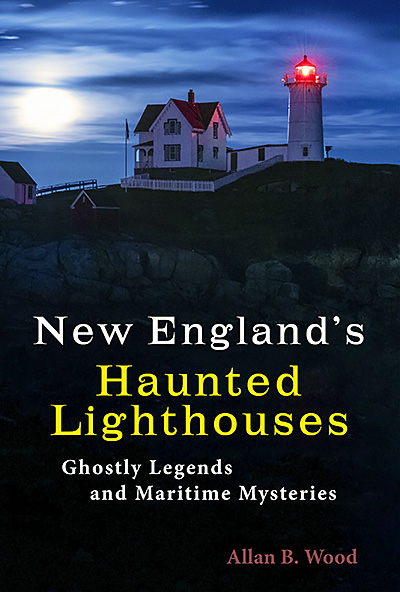
New England’s Haunted Lighthouses
New England’s Haunted Lighthouses:
Ghostly Legends and Maritime Mysteries
Uncover the mysteries of New England’s haunted lighthouses! Uncover ghostly tales of lingering keepers, victims of misfortune or local shipwrecks, lost souls, ghost ships, and more. Many of these accounts begin with actual historical events that later give rise to unexplained incidents. Immerse yourself in the tales associated with these iconic beacons!
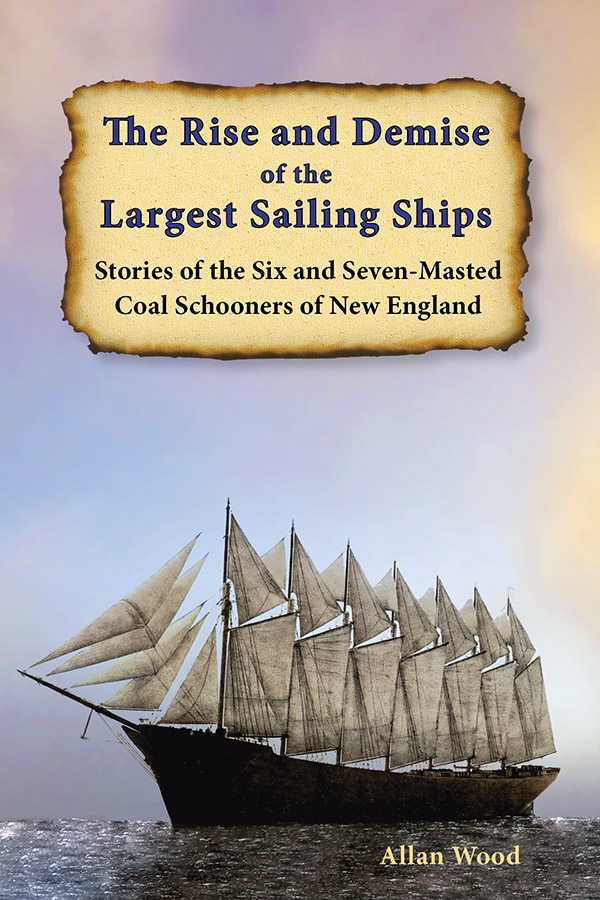
The Rise and Demise of the Largest Sailing Ships
The Rise and Demise of the Largest Sailing Ships:
Stories of the Six and Seven-Masted Coal Schooners of New England
In the early 1900s, New England shipbuilders constructed the world’s largest sailing ships amid social and political reforms. These giants were the ten original six-masted coal schooners and one colossal seven-masted vessel, built to carry massive quantities of coal and building supplies, and measured longer than a football field! This self-published book, rich in color and vintage images, showcases the historical accounts that accompanied these mighty ships.
Available also from bookstores in paperback, hardcover, and as an eBook for all devices.

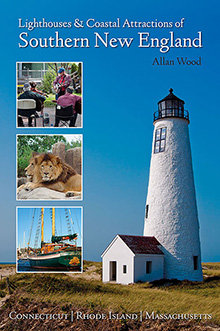
Book – Lighthouses and Coastal Attractions in Southern New England: Connecticut, Rhode Island, Massachusetts
Lighthouses and Coastal Attractions of Southern New England:
Connecticut, Rhode Island, and Massachusetts.
This 300-page book provides memorable human interest stories from each of the 92 lighthouses. You can explore plenty of indoor and outdoor coastal attractions, including whale-watching excursions, lighthouse tours, windjammer sailing tours, parks, museums, and even lighthouses where you can stay overnight. You’ll also find plenty of stories of hauntings around lighthouses.

Book – Lighthouses and Coastal Attractions in Northern New England: New Hampshire, Maine, Vermont
Lighthouses and Coastal Attractions of Northern New England:
New Hampshire, Maine, and Vermont.
This 300-page book provides memorable human interest stories from each of the 76 lighthouses. It also describes and provides contact info for plenty of indoor and outdoor coastal attractions and tours. These include whale watching, lighthouse tours, unique parks, museums, and lighthouses where you can stay overnight. There are also stories of haunted lighthouses in these regions.
Copyright © Allan Wood Photography; do not reproduce without permission. All rights reserved.

American Lighthouse Foundation
Join, Learn, and Support The American Lighthouse Foundation